







Indigenous-Led Flotilla Crosses the Amazon Demanding Climate Justice
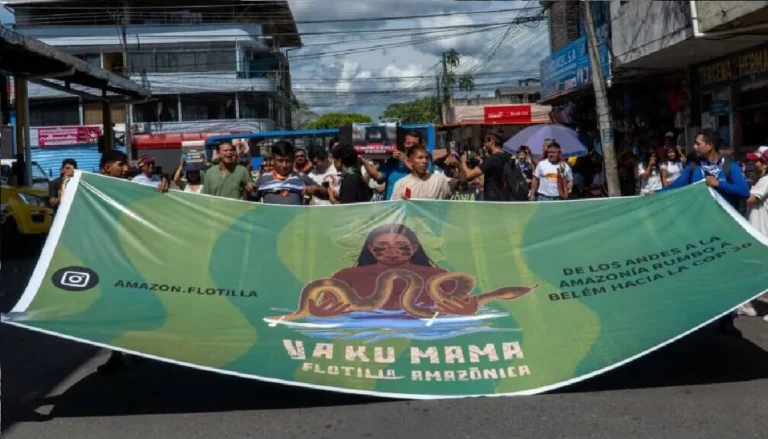
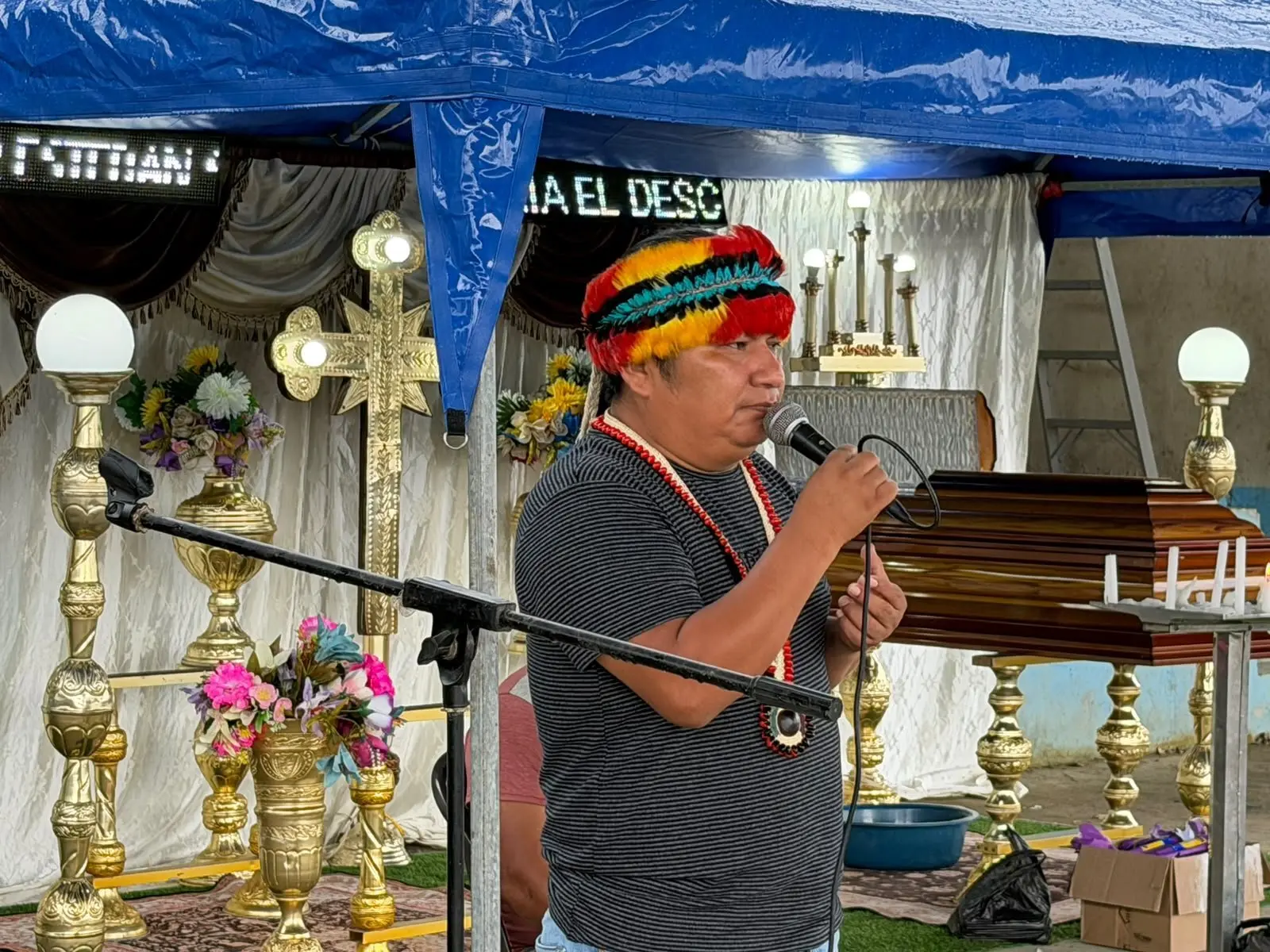
The Yaku Mama Amazon Flotilla, which set off on October 16, is led by Indigenous peoples. Photo: Not to the Mine.
October 23, 2025 Hour: 6:49 am
🔗 Comparte este artículo
The Yaku Mama Amazon Flotilla is sailing across the Amazon to defend environmental security, having begun its journey in the city of Coca, in Ecuador’s Francisco de Orellana province, and heading toward Belém, Brazil, where it is expected to arrive in time for COP30.
RELATED: Brazil: Lula rejects US interference and defends Amazonian cooperation against crime
According to Telesur correspondent André Vieira, one of the movement’s central demands is an end to fossil fuel extraction in the region. This directly challenges a recent decision by Ibama (Brazil’s Institute of the Environment and Renewable Natural Resources), which granted Petrobras a license to explore offshore oil reserves roughly 500 kilometers from the mouth of the Amazon River, in the so-called Equatorial Margin, between the states of Amapá and Pará.
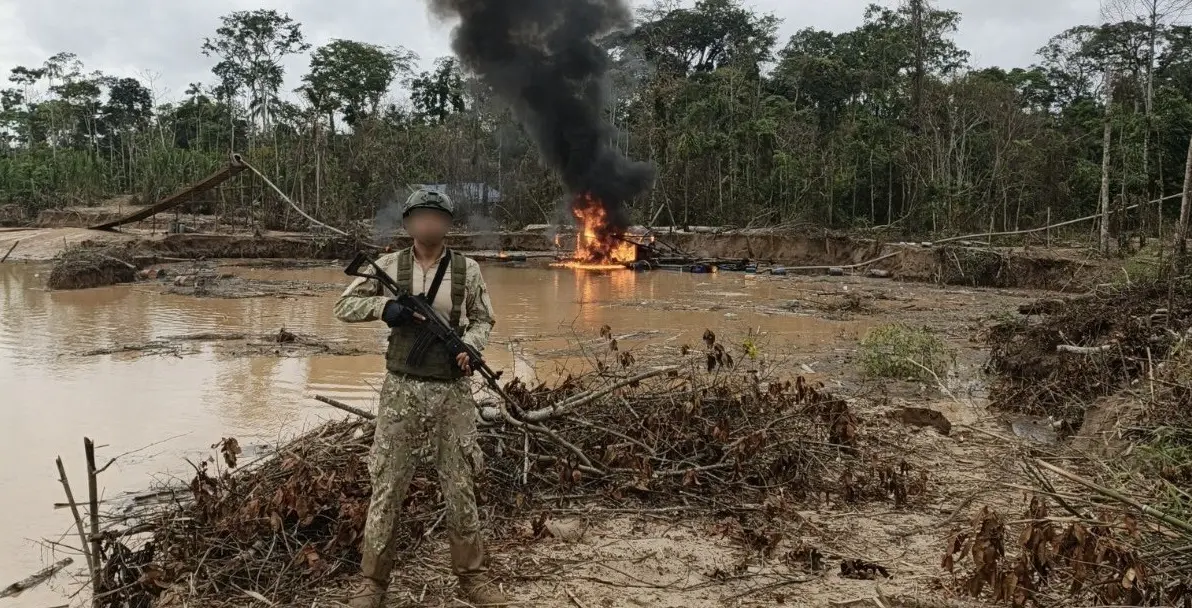
The “No to the Mine” platform reported that during its voyage, the flotilla will visit riverside and Indigenous communities, documenting the spread of illegal gold mining, oil spills, and the devastating effects of monoculture farming, which have already destroyed more than 4.5 million hectares of forest in recent years.
Brazil’s National Institute for Space Research (INPE) recently reported encouraging data: a 98% drop in fires in the Pantanal, an 80% decline in the Amazon, and a 42% decrease in the Cerrado — the lowest figures recorded since 1998.
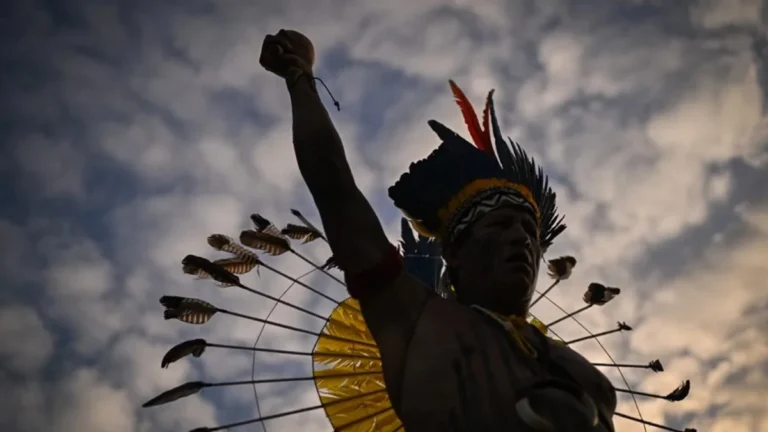
The flotilla, which set off on October 16, is led by Indigenous peoples, territorial organizations, and international allies. Its mission is to protest fossil fuel extraction in the Amazon ahead of the 2025 United Nations Climate Change Conference (COP30). It includes 50 delegates representing nine countries — Guatemala, Mexico, Panama, Colombia, Ecuador, Peru, Brazil, Indonesia, and Scotland — all calling for a just transition to renewable energy.
COP30 will take place from November 10 to 21, 2025, in Belém, Pará, Brazil. Scientists warn that atmospheric carbon dioxide (CO₂) — one of the main greenhouse gases — has long surpassed the safe threshold of 350 parts per million (ppm) and currently stands at 424 ppm, with projections suggesting a new record next year.
The environmental platform Tierra Viva reflected on the broader picture, noting that “thirty COPs have passed without halting the rise of greenhouse gases. After three decades of declarations and promises, emissions continue to grow, and their consequences worsen. What should concern us now are not the bold speeches or ambitious pledges, but the collective failure — a harsh truth, yet impossible to deny.”
Author: vmmh
Source: Not to the Mine - Tierra Viva Agency - Telesur